Thursday, 26 April 2012

Presentation day (week 12)

Alhamdulillah, the slide finished according to plan. Mr Suhairi and Madam Lily will be my assessor on that day. Day before presentation, i already seen both  assessor to get their requirements. Basically, the presentation achieved my goals to present all the research that we have done so far. I have explain the basic component on the robot, the layout of the track, and give the assessor idea about how the robot is going to look like by showing her the prototype design. But the are some argument on the extinguisher. I decided to use fan as extinguisher but Mr Suhairi claim that it's not suitable. So I'll note on that and take action. Overall the assessor satisfy with all the explanation except the sensor part. The assessor did ask me the limitation of the IR Sensor. I guess I have to research and study more on that. I hope I get the best marks from the assessor and more guidance from Mr Syamsul on the next level in building this Final Year project. Work planing chart attach as below:

 FYP Semester 1/2012
Work planing chart
Blue - Actual
Red - Planned

Working on slide presentation ( week 11 )

From the report on weekly 12th, I have basically done with the Flow Chart and the Block Diagram where I  can know what is the exactly function of the parts.I also added the comprising 3 type of motor and this is my finding;

  • Servo Motor (SELECTED)  - Least expensive non-surplus source for gear motors. Can be used for precise angular control, or for continuous rotation.
  •  Stepper Motor  - Consumes high current. Needs special driving circuit to provide stepping rotation. Cannot support heavy structure due to low torque.
  • Continuous DC motor  - Requires gear reduction to provide torques needed for most robotic applications. Poor standards in sizing and mounting arrangements.

 I'm also doing  a comparison between Microcontrollers between PIC (Peripheral Interface Controller), Atmel AVR (8-bit microcotroller), and Intel 8051 (8-bit microcontroller). Function of this Sensor is to detect the obstacles while the robot is on the run.Below is the result of the comparison.


  • IR sensor (Infra-Red) - Low power requirements with simple circuitry. There is no special or proprietary hardware is required, can be incorporated into the most integrated product
  • Ultrasonic Sensor - The readings from an ultrasonic sensor can be distorted by Density, Consistency, Material
  • Triangular-Based Sensor - High input is required. The sensing is very   sensitive and a lots of noise. The sensor is very sensitive and must always      kept clean otherwise it effect the accuracy of sensing. The operating     temperature is very limited and required external cooling system.
I have decided to choose  the IR Sensor because itt is simple and easy to operate. It is also  the most suitable for this project.  

Tuesday, 24 April 2012

10th week - Meeting and Discussion

For this week, I concentrating to get the slides to be done for week 12, i had further discussion more about the element to be in the slides. So Mr Syamsul told me, the most important things in the presentation is the Block Diagram and Flow Chart of the hardware. And to add some comparison to the parts and component that i choose.

To study more on the robot for the presentation, i have asked from my senior last semester on the robotic project. So, i able study and explain more details on the system for the Fire Fighting robot project. I'm very thankful to Mr Syamsul providing me such a useful exposure.

Monday, 23 April 2012

9th week - Components survey

In bustling to get the presentation slides in progress, i heard rumors that in Jalan Pasar the component sells in cheap price so i steal some time to survey the component in Jalan Pasar in order to test the parts that we going to use. Basically, the main parts that we survey such as Microcontroller (PIC), Servo Motor, IR sensor and IRPD infra red proximity detector.

As shown below, price of the components :


NO
 ITEM
UNIT
PRICE (RM)
1
Microcontroller (PIC 16F877A)
1
RM 50
2
Servo Motor
2
RM200
3
IR infrared sensor
1
RM70
4
IRPD infrared proximity detector
1
RM90


TOTAL : RM 410

This is the basic parts and component that we going to use at the time being. As for my budget is below RM500 in building the circuitry not including the cost for the structure. There will be some added component and parts in the future testing.

Sunday, 22 April 2012

8th week - IR sensor (infra red)

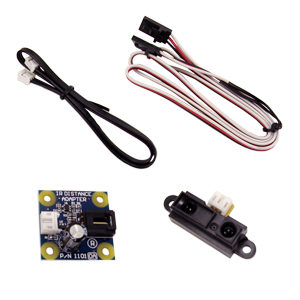
 figure 1 ; Hardware

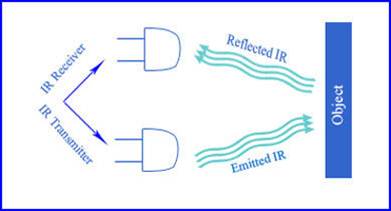
 figure 2 : IR schematic
       On this 8th week, I will discuss about how the IR sensor is working and what is the component that I use. By refer the above pictures, it shows basic component and how the sensor functioning. Why I'm choosing this sensor?
  •  Low power requirements with  simple circuitry. 
  • There is no special or proprietary hardware is required
  • Can be incorporated into the most integrated product.


Saturday, 21 April 2012

7th week - Understanding microcontroller

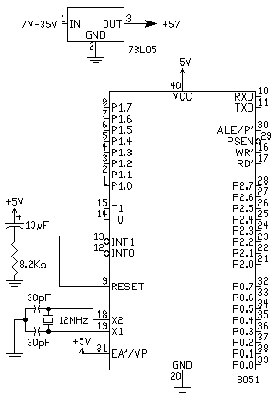
Week 7 is our phase test week. We are not able to meet our advisor since we are busy with our exam. Thus, we still doing our research for this project. We start to understand the microcontroller interfacing. We will use PIC 16F877A for our project. There's a little brief about microcontroller and simple circuit.


Figure 1 : Basic setting of PIC 16F877A


Figure 2 : Basic Wiring Servo Motor and Microcontroller

We are using Proteus to do wiring of the project and MPlab software to write the program. We have started to write our source code and still in learning process.

Monday, 2 April 2012

6th week - Fire detection


Fire detection scheme


To detect the flame from the candle the team thought about implementing a motion detector to detect the wavelength of the flame. I have decided on using an IRPD (infrared proximity detector). With this the robot would be a ble to sense an object in the front left, front center, and front right. in order to detect the flame we will need to calibrate it to detect the flame of a candle. Another way, which we just recently found out about, is to use a silicon photodetector wi th a long-pass filter and calibrate it to detect candlelight.
                                                          IRPD (infrared proximity detector)
I
                                                   Signal spread of the detector

When the candle flame is spotted in the range of this detector it the robot will be able to come in on the position of the flame, come closer, and put it out.